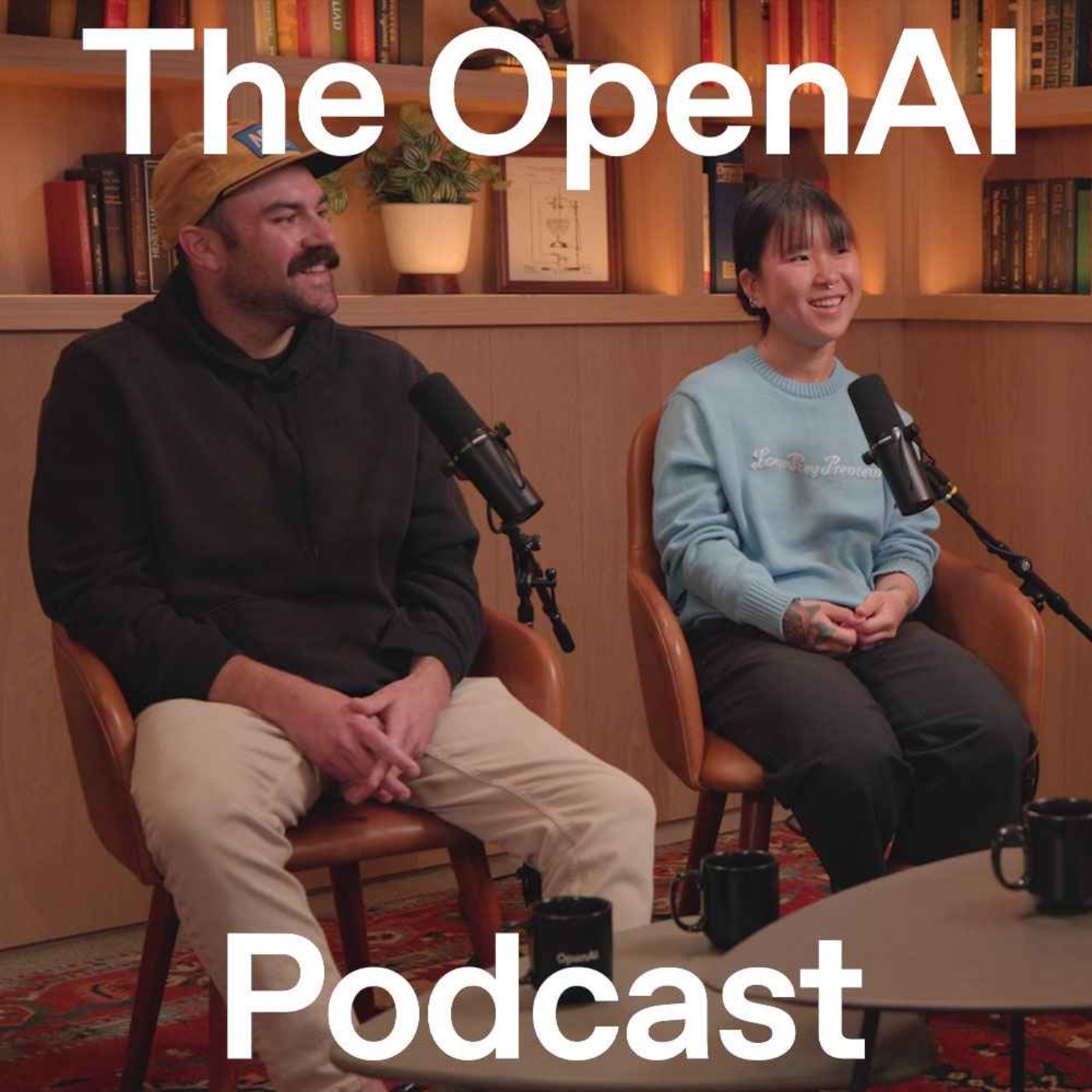
OpenAI Podcast · 2026-07-16
PodcastYouTubeAI in Motorsports: OpenAI x Chip Ganassi Racing & RaceTek
Hosts: Andrew Main
Guests: Joyce Ruffell, Chase Holden
Why it matters
OpenAI's Joyce Ruffell and RaceTek's Chase Holden on applying AI to IndyCar and NASCAR data workflows.
Key claims
- OpenAI has an active research collaboration with Chip Ganassi Racing focused on IndyCar and Indy NXT data
- Major opportunity is unifying qualitative inputs (driver feel, engineer notes) with quantitative telemetry into a single dataset
- Much motorsports knowledge lives in complex Excel spreadsheets that are not natively AI-friendly, requiring format conversion work
- RaceTek was built by a non-technical founder using ChatGPT and Codex, exemplifying AI-enabled entrepreneurship in racing
Radar summary
Summary
OpenAI researcher Joyce Ruffell describes an ongoing research collaboration with Chip Ganassi Racing across IndyCar, Indy NXT, and previously NASCAR and sports car series. The work focuses on motor racing's unique data challenges—high-bandwidth time series telemetry that must be processed both retroactively and in real time at the track. Ruffell emphasizes a key insight: motorsports data is not just telemetry but also qualitative inputs like driver feel descriptions and engineer notes, and AI's biggest value is bridging that soft/hard data gap into a unified dataset. She also notes that much team knowledge lives in sprawling Excel spreadsheets and that a significant portion of the work involves education and prompt engineering to help engineers and drivers use the models effectively.
Chase Holden, co-founder of RaceTek, shares how he built a racing intelligence software company using ChatGPT and Codex, despite having no prior software background. He frames racing as being in a "data wars" era where speed of organization and decision-making wins, and argues AI lets smaller and mid-tier teams punch above their weight by replicating the workflows of larger engineering staffs. Both guests agree the competitive edge in motorsports is increasingly about who can move from idea to validated prototype fastest.
The conversation also covers how AI compresses information for drivers, who often lack engineering backgrounds, and helps with logistics, parts tracking, and reducing repetitive human-error-prone tasks across team departments. A forward-looking thread argues that as AI tools become ubiquitous, advantage will shift back to human taste, instinct, and creativity—turning prompt engineering and workflow design into the new competitive battleground once it stops mattering who has access to the models.
- OpenAI has an active research collaboration with Chip Ganassi Racing focused on IndyCar and Indy NXT data
- Major opportunity is unifying qualitative inputs (driver feel, engineer notes) with quantitative telemetry into a single dataset
- Much motorsports knowledge lives in complex Excel spreadsheets that are not natively AI-friendly, requiring format conversion work
- RaceTek was built by a non-technical founder using ChatGPT and Codex, exemplifying AI-enabled entrepreneurship in racing
- AI is positioned as a force multiplier for small and mid-tier teams competing against better-resourced rivals
- Driver communication is a key application—distilling hours of technical material into digestible summaries
- As AI tools commoditize, competitive advantage is expected to shift to human taste, instinct, and prompt/workflow engineering skill
- OpenAI frames the collaboration as pushing model performance forward due to racing teams' high quality bars and goal-oriented demands
Source material
Full source text
Hello, I'm Andrew Main, and this is the OpenAI Podcast.
In this episode, I spoke with OpenAI researcher Joyce Ruffell about her experience helping the Chip Ganassi Racing team use AI to improve everything from logistics to driver performance.
I also spoke with Chase Holden, co-founder of RaceTek, about his experience using ChatGPT and Codex to build a racing company.
As seamlessly as possible.
As when everybody's kind of on the same page, that's where results come from.
Data is everything with racing at this point.
I believe we are in what's called the data wars right now.
What's your role at OpenAI?
Joyce, tell us about your role at OpenAI.
So I am a researcher here at OpenAI.
I have been looking at mostly data problems for the last few years here.
Everything from data sources, data quality, data pipelines, data efficiency.
And one of these data-oriented projects I've been working on recently has been this research collaboration with Chip Ganassi Racing.
They currently run in IndyCar.
That is our primary focus with them right now.
So in the IndyCar and the IndyNext series, they have also previously run in NASCAR as well as in sports car.
So this is a very interesting intersection, both as a researcher looking at data.
And I imagine there's a lot of data in motor sports.
Yes, there really is.
And it's a very unique kind of data.
It's a lot of high bandwidth time series data that we can both look at retroactively.
But we also want to be able to process in real time at the track, make calls and draw conclusions as quickly as possible.
Chip Ganassi is a storied team.
They've been around 35 years.
They have tons and tons of data from a variety of different drivers on a number of different tracks in different series, different specs.
So they have all the know-how, but it's about making it accessible so that they can compare and they can build hypotheses and test those hypotheses and either draw results or go back to the drawing board.
But the faster you can pull from that data and get the answers you need, the more experiments you can try, the more fine tuning you can do before every race, but also before every qualifying and every practice.
You make those sessions more valuable in terms of data gathering exercise toward the race, which is the only goal that matters.
How would you describe what race tech does?
So race tech systems is our business.
We are currently building just racing intelligence systems kind of at will for customers like bespoke software, things of that nature.
We do have one project that we're currently working on right now that's essentially just the all in all racing intelligence, kind of how Joyce was talking about some of those little things that you might miss during the week.
This is a system where you can kind of catch all of it and everything can kind of live in one place.
So that's one of the projects we're working on, but really mainly just racing intelligence tools that allow the crew to assess things from a smarter lens and to make better decisions at the track every weekend.
What got you involved in motorsports?
So growing up in South Louisiana, we didn't have a lot of race tracks around us, but my dad and my mom had a lot of friends that would go to Talladega Super Speedway.
So that's kind of the wild, rough and rowdy style of race where all your fans that are from the South, they have like this kind of traditions, right?
At Talladega, you have the Boulevard.
So there's a lot more to offer than just the race itself when you go there.
So that was like a very big event that my mom and dad's friends got involved in, pulled me into it when I was only about five years old.
And the moment that I saw the stock cars come down the straight, I just knew I was hooked.
It was one of those things for me to where you get to combine family, friends, and then you have something that's like super high speed that you've never seen before.
And the sheer size of that track and just seeing all these cars going so fast, these guys that are just putting it all out on the line, just for competition's sake, nothing really more thrilling than that.
So that captured me pretty early on.
And now you find yourself running a racing company.
And how does that happen?
It's not like you walked onto the, you saw your first NASCAR and you're like, okay, I know what I'm going to do now.
Yeah, no, it was a very, very strange journey.
Honestly, a lot of people come into NASCAR through the competition side and end up usually going into media.
I came in through media and now kind of moving into the competition.
And I started out before I got into racing, I had just kind of normal job, worked in finance and did insurance and things like that.
And then just kind of had this awakening probably around like 2017.
I was like, I need to do something more with my time.
I feel like I'm not fulfilling myself as like a person.
And I wanted to get into radio.
I've always loved radio, right?
So I got into that, got into podcasting, did that for a while, and then really was able to just build a community around a show that I was doing that was centered around NASCAR and sports betting actually.
And then probably around 2022 that was going around strong.
Chad GPT comes out, a big follower of AI.
I've always been interested in science fiction, artificial intelligence.
And I was a kid, I would watch Bicentennial Man and AI on loop.
So the future always really fascinated me.
And the moment that a tool like this existed, I knew, okay, I'm about to spend so much time just researching and seeing what's possible and what can this do.
And the more that I dove into that, the more I started to learn a little bit more of what the model was capable of.
And so I've been with multiple versions of Chad GPT now and working with them, also working with Codex.
But it was the moment for me understanding that I can now take my ideas and I can take the things that I want to see become real in racing.
And I have a way to construct that now.
And that was something that I had never had before.
I never are trying to even explain the vision of what I've built to somebody.
Sometimes you might hear like, oh, that's a little far fetched or that's a little this.
So I don't have to worry about that now.
I can just kind of put that together.
I kind of always knew that racing has given so much to me that I want to give back to racing in a way that I best can.
And for me, that's nothing sweeter than trying to bring something completely new to the sport.
Something that maybe these guys and girls have never really gotten to experience.
And especially just the thought process of looking at the smaller teams or the mid-level teams that don't have as much of that support on the top level.
So all of that kind of being put together and just I think it's a big mixture of a lot of things.
Like really just like the reason that I loved AI so much growing up and I really understanding that.
Then being able to build a career for myself in the racing world and then being able to kind of merge both of those together and then seeing that it actually works.
I think was kind of the moment for me where I was like, okay, this is what can allow us to kind of get things where we want to go.
- So I've known you for a while, but I didn't know that you were that much into racing until about a year ago.
How did that happen?
- So I don't think I try to keep it a secret.
I run the social car channel here at OpenAI.
Been into cars for a long time, just always fascinated by the combination of engineering aesthetics and just kind of the emotional appeal that they have to people.
I would say got into racing, just fell hard for racing during COVID, not because of drive to survive, but just because I found myself with time and with a partner who was interested in going to the track with me.
And so started going to the track, followed a bunch of different series, everything from sports car, Indy car, NASCAR, and just loved the community, loved the engineering and went from there.
- And then you somehow got OpenAI to get involved with racing.
- So I worked in automotives before coming to OpenAI and being a woman working in this space, I went to this conference just out of curiosity to be more of the community.
And this was out in Indianapolis where most of the Indy car teams are headquartered.
On this trip, the conference organizers had connections to several of the teams who invited us to our shops, which I don't know, maybe Chase, you can speak to this.
You work with teams as well, but this is like an honor.
This is like a gift.
These teams are very secretive usually, and to be invited in was pretty unusual and really eyeopening for me.
And really got me thinking about how, why I work in this AI industry that we're a part of can help this sport that I love.
We were also really lucky that Chip Ganasi Racing was one of the shops that was part of this conference.
And they were already looking at how to make AI work for their sport as well.
I think this was late 2024.
No one was really talking about it at the time, except maybe you Chase.
- Was there a point where you realized that there was going to be an advantage to this?
There was a lot of things that people had just done for years the same sort of way, but then all of a sudden you're bringing an AI into this.
There's been some point where you said, "Oh wow, I can clearly see the difference."
- Starting out, there was a lot that I knew I had to learn about what was happening behind the scenes and with the teams.
Being on the inside of it now, I guess I have always held on to the notion that anyone has the ability now to organize things in a way to where you can get what you need faster.
And I think that that for me is probably still the thing that still rings true.
It's always going to be about who can organize the best.
It's always going to be about who is knowledgeable on a certain track or certain corners or understanding a driver the best way or understanding the limitations that you have on your team.
And for me, it was always about whoever can put that together the best and the quickest is probably going to see a huge uptick in their results over a season.
I think a big thing that I want to know from you is what are some of the things that you found where you're able to deliver exactly what you're being asked to deliver and what is I guess the most smallest little detailed thing that you've been able to deliver to the team that may not seem like anything to anyone else, but it makes all the difference to everything that you're doing operationally on the track.
One of the most impactful things that we've delivered to the team is frankly, it's education.
It's education on a little bit about how our models work.
I think it helps to pull back the veil and show that these are just machines under the hood and it's not magic.
And these guys are engineers and they understand that.
And once you understand how the machine is built, it's easier to conceptualize how to work with them better.
So that's taken the form of prompt engineering is something that has Andrew, you are the original expert prompt engineer, but yeah, just showing them, for example, that it's all about the input.
If you give it the right input, you'll get the output you're looking for.
And so there's some onus on you as the user to figure out what that right input is.
And frankly, what we do with Chip Ganasi, we do a lot of prep work ahead of the race day.
I mean, these guys are just, they're so good at what they do.
They know exactly what they need once race day comes.
I think we're still exploring what more we could be, what exactly we could be putting in front of them that would help them in those strategic calls they're making.
But a lot of the work we do is ahead of time just to make sure the guys on the timing stand feel as prepped as they possibly can for each and every track.
Yeah, I think the driver side of it is a huge thing, but education is everything, right?
It's like if you don't know what you're working with, you're just approaching it from just your own perception, you don't know what that looks like for that user.
So that's super important.
And I know that that's something that we've had a little bit of time to kind of work with and talk with.
But driver wise, I find that you say the teams, they're able to put things together.
Sometimes you just, these guys, they've been doing this for a long time.
They know what they're doing.
You're not going to tell them how to do any different and they're going to go in there and get that car set up.
So it's like you find these other areas where you're like, okay, well, when you need me, I'm here for these parts, but you look at other facets.
The driver I feel like is a place right now where AI can really help to work more on that barrier breaking for communication.
Not every driver is an engineer and not every driver understands what is being communicated to them all the time.
Sometimes I feel like some drivers will just nod their head and they might be like, sure, yeah, understand.
And I'm not just not to say that they're not trying to, but I feel like when you're using artificial intelligence now, you're able to hand over something to a driver that may have taken them four to five hours to study and look at.
And now you're able to give it to them in a way to where it's nice and it's readable, it's digestible, and they can figure out exactly what they need to do at the track from a practice report when they're ready to go back out for the actual race and try to get a better finish.
So I think on my end personally, what I've seen is just when the team seems like they've got all of the T's crossed and the I's dotted, I'm automatically moving over to the driver and we have a lot of back and forth with that as well on the NASCAR side.
Yeah, I mean, it's about providing information to the driver too.
It's like if you can get information to the engineers, they can get it to that driver.
And then at that point, it's just a more informed call.
They're always trying to make the best call they can with the information that they have.
So just doing that faster is the name of the game.
Would you say that some of it's just information advantage?
Like you mentioned, there's a lot of little things that go into like every track has its different shape.
Everything has this stuff.
And sometimes there's a lot of knowledge out there that just sort of sometimes stuck in driver's heads or in crew members heads, things like this.
And it's getting that data out there into some format that a tool like Codex or ChatGPT can sort of look at it helpful.
Absolutely.
I mean, I think part of the learnings of a lot of the world lives in Excel, I would say.
The motorsports world definitely lives in Excel.
And our models can work with Excel, but it's not their favorite format.
So part of it is figuring out, racing, I will say, is a history of the man and the machine.
How do you get those to work together as seamlessly as possible?
And I think that's one very unique aspect of motorsports in contrast to stick and ball sports.
And I think AI is part of the machine side of this.
It's not just that we need to make AI work with how people work today.
It's about having them evolve together and having man learn how to work with, communicate with our models in the most seamless way possible.
What have been some interesting challenges or problems you've been able to throw at it to say, oh, this is actually you're seeing a meaningful difference here.
I think the most interesting problems we've been looking at are sort of like that soft interface of you have a lot of most data.
When we think of data, we think of numbers, we think of telemetry.
Well, we've always had scripts, we've had plotting algorithms, we've had all sorts of, I'll call it traditional software tools to deal with large amounts of data.
But then there's all the kind of softer stuff.
A driver describes how the car felt, or how an engineer drops down some notes over the course of some session.
That's data too.
But that data is harder to organize traditionally.
And it's harder to fetch and retrieve over and to correlate with these hard data numbers that we are getting off of the ECUs and other systems.
And so one place where AI is really coming in here is to help bridge that gap and coalesce that into a single data set that people can work with on all sorts of downstream goals.
Running a company and being involved in something like this, you're competing with some more established brands.
Have you found that this has been a good edge?
Or how has it been?
I would say so.
It's tough to say exactly what's going on behind the doors of these different teams that we're at.
I've definitely heard rumblings.
You know, you kind of know a little bit more of a lot of things on the ML side, I would say, are probably happening right now.
But for what we're doing, this is essentially allowing any team to kind of put together a group of engineers, in a sense, to where it's just allowing you to be able to take in, like Joyce was saying, all the little things that fall by the wayside that go along with the harder data and put that together to give you the clearest picture.
So that would be the same way of like, you know, you've got eight engineers that are kind of working for your team.
And some of these large teams that are out there in NASCAR specifically, you know, they have multiple engineers that would be on the box.
You know, not every team can afford that.
So you have all those guys to kind of focus on these individual tasks that they're doing for the team and the individual data sets that they're looking at.
And that's all kind of comes together when they all meet.
Right.
So, you know, a system like like we're building and the different tools that we're able to build, you know, these are going to be those things that kind of help to fill those gaps.
I don't think they'll ever fill like an entire team of engineers, but it's something that can get smaller teams and medium sized teams closer to what some of these juggernauts on the track are doing.
Yeah, I want to second that because the thing about AI speeding up what an individual can do, like many of these teams are constrained.
The amount of time that they have is limited.
But many of these people, if you and Chip Ganesse is a pretty small outfit in the grand scheme of things.
I mean, they're like under 200 people and everyone wears lots of hats there.
And so if any sort of AI tooling, ML tooling that we can build out helps that person do one thing faster or set of things faster, it frees up their time, it frees up their mind to pursue these questions that they might have been interested in doing, but it got prioritized down.
And you never really know sometimes those questions that you thought about, but you didn't really have time to look at could be the next big step or the next most revealing thing and the edge that they find in the next race.
For a racing team, time is the unit of measure they use for everything.
So they're looking at all of their processes, they're looking at, you know, if you think about what an operation it is to get all the stuff that needs to be at the track to the track all over the country for sometimes all over the globe, for the teams to be able to show up and deliver those results.
Like that's a huge amount of logistics right there and AI can help with that.
It can help with, you know, parts tracking all the parts that fall off the cars or get broken during a race weekend or need to be replaced.
You know, AI can help with that.
And so for Chip Ganassi Racing, it's all the way down.
They've been looking in every one of their departments for applications where AI can help the often is just one individual who needs to be responsible for a ton of different roles and a ton of different projects.
They're looking for ways to make AI reduce the most repetitive and most human error prone parts of their jobs.
You mentioned something that I'd never heard before, which is probably everybody in motor sports probably knows, but just how much of this is exist in spreadsheets.
Can you give us an idea of what you mean?
Like how granular that gets?
When I'm working with a team, I usually request them in formats other than spreadsheets because that is not a unit.
You know, the issue is MacBooks here and MacBooks and Excel sheets don't really play super nice.
So by the time I get the data, it's they've already done.
The team has been generous enough to me to do the legwork of converting it into other formats.
That being said, when we've been on calls and they pull up these sheets of just tons and tons of data, it feels like they can infinitely scroll to the left or down.
And it's a really interesting evolution.
There's like some joke somewhere, spreadsheets are Turing complete or something.
So you could build anything you want in a spreadsheet.
But it really feels like that when you look at some of these, it's the level of complexity of not just the data entry in it, but it's like the highlighting, it's the connections, it's the formulas, it just keeps going.
And so credit to Chase and RaceTech for trying to figure out how to work natively with that and to show teams that there is another way to operate with this data.
I mean, we've gone through what sounds like a similar process with Chip Ganasi to show them, hey, the investment to convert this into a more AI native format is worth it because these are all the downstream results you can derive from it if you give the models a format that they can actually work with rather than a format where the model is like, well, sorry.
But our models evolve too.
And so I think it's really important that we test every three months, hey, what is state of the art?
Can our models work with something that is a little bit upstream of this process so you don't have to do so much legwork to get it into a format that AI can understand?
And kind of going back to this like man in the machine, AI gets closer to man, but AI learns how to do that because of the affordances and the process that we attempt in order to.
We have to figure, we as the people building AI need to figure out where that gap is so that we can close the gap.
Yeah, I've seen some of it gets into a lot of it, every race, every attempt is like an experiment in measuring things like the weight of the tires before and after and other kinds of things I would never think about.
And that's the thing that I think is fascinating.
Yeah, those are things that have to be tracked.
And those are very meticulous things.
I would say that the level of data like Joyce was talking about with these Excel sheets, it's you have these multiple engineers that have these multiple different jobs and they're focusing specifically on like one engineering task.
So they might have that one engineering workflow that's built out and we're just in a time now where as software evolves, it kind of walls start to get broken down a little bit, right?
And I feel like that's what AI is so good for is to be able to bust some of those brick walls down and the communication barriers that are within teams.
Sometimes you may have like an engineer that understands something one way, he's got an Excel program that he's built out that he's using.
That doesn't necessarily mean that someone else on that team, the crew chief or a mechanic or another engineer may really understand what that workflow is.
And we now have this opportunity to be able to build a simpler version of those Excels and allow for these teams to be able to all kind of pitch in and understand it a little bit better.
So I think that right now where we are, and I know in NASCAR, it's this way, IndyCar definitely, IndyCar is very data dense or data rich.
It's just really at a point where we have to figure out how to simplify these things.
And I feel like that's where results come from is when everybody's kind of on the same page, you can move forward.
And the data streams, I think are only going to get tougher and tougher as we continue to move.
So that's just the ultimate thing right now is telling Joyce at the dinner, like I believe we are in what's called the data wars right now in racing, maybe on the IndyCar side and the NASCAR side.
So can't stress enough how important every little piece of telemetry or every little handwritten note or every idea or every moment of just strategy that's coming from a thought, you could catch that now and you can have that to implement.
So data is everything with racing at this point.
It's interesting too, because you've talked about being somebody who had been in the world, interested in the world.
And then post chat, GPT, you saw an entry point and you saw that we're somebody like you who's got, you know, probably understood a lot of different things, but understood how this technology applied to something you followed for a long time.
And there are probably a lot of other people that might have opportunities in front of them if they think that way.
Can you convince that in any kind of advice or?
Yeah, I mean, it's just, it starts with shaking the stereotype of AI off and having an open mind to become curious and to figure out like what is out there?
Like what are these tools?
How can I use them?
Because I tell everybody all the time, like when it comes to AI, it's, you know, output's going to be there.
But what's the input?
How are you communicating to the model?
What is your intent?
How are you speaking?
So I always try to go above and beyond when talking to people to really understand people and kind of see where their minds at to help them communicate best to get the best result.
And I would say that, you know, just start by going to a Reddit forum, go and read up a little bit on some of the models, go Discord.
There's legitimately an open AI Discord that's out there.
And you can learn so much in there just with all the other developers that are around the country that are working with these products.
But, you know, start by just going to chatgpt.com.
Start going to chat.com, as it's called.
Now, start going there and just get curious.
Don't ask about the weather.
Don't try to, you know, just one, two, three liners.
Like really just open your mind and put something in there and watch what starts to happen after a conversation churns, you know, for about a good five minutes.
You're going to start seeing that things are sparking in different ways for you.
And, you know, and then, you know, all the other tools like Codex now that exist, you know, these coding tools that we have, the, you know, having the IDEs has been insane.
Like it's a great product.
And, you know, for somebody that came from, you know, dragging and dropping code on, you know, Chad GPT four, oh, you know, at the time, you know, now we have something like Codex where you're putting it right there on your desktop and it's taking care of some business for you and allowing you to save that time.
Spend a little more time with your family in the evening or, you know, okay, I set a goal and I know this thing is going to run here and you just got to watch out for the rate limits.
The rate limits, they come, they come for us all.
But, you know, it's just, I think that there's just still very noise.
There's, I think that there's still a lot of noise about AI in a negative way.
And we're probably going to have that for a while.
And I think that it's, it's healthy to, to accept that.
But also, there's always going to be maybe that one or two out of 10, that's going to be curious.
And it's going to see that.
And they're going to see that other side of it.
They're going to see the side that I saw the side, pretty much anyone I've talked to has seen.
And it's that, oh, this is something that can become an extension of, you know, my ideas or this can be the thing that allows me to finally get that thing done that I've been thinking about for 10 years.
You know, nobody wants to be the guy where, oh, I had that idea five years ago.
It's like, you don't have to be anymore.
How did you win over your first customer?
Really just, I got fortunate.
I moved up to North Carolina for one, I'm kind of an all in guy.
So like when I, when I know I'm going for something, I may not always, you know, look at the risk.
I'm just kind of like plan a let's go.
You know, really just having the conversations with, with, with the driver that is on our team, which is SS green light, VRK racing Garrett Smithly had a great conversation with him back in November before we officially started working together.
And he was just interested in artificial intelligence himself.
So that was most of the work I would say is just the interest was already there because that's something that you have to create and instill and people want to see.
So with that interest being there, that helped me to be able to do that.
Plus my media experience that I've had podcasting experience that I've had in the past, you know, we had some other angles that we wanted to work as well.
So that's why I say I'm kind of wearing multiple hats in the role that I'm in, but you know, definitely knew that this could exist.
And I wanted to be able to get in the building and make that happen.
So using that along with some other skills I've developed over the years was what was able to kind of get race tech in the door with SS green light racing and allow us to start seeing what was possible with the data that we do have access to in the NASCAR Riley auto part series.
Car cultured opening eye is like a real thing.
You touched upon that earlier, like seriously for people who are working on AI and computer systems and stuff, the amount of people who really like, you know, combustion engines, Iced stuff like this really into it is, I think would surprise a lot of people.
You know, one thing that is really attractive to me about racing is that it's such a distillation of like all the things you do, you know, it's, you're looking at the setup you're doing, you know, figuring out the exercise regimen for your driver.
You're trying to make weather predictions constantly.
It's all these things that you're, you're looking at.
And at the end of the day, it comes down to a number and that number is your time or your position and when it's a, it's a really distinct distillation of all your efforts.
And I feel that way about a lot of my research too, you know, you spend months looking at these different data sets, running these different experiments, trying different architectures.
And at the end of the day, you have, you're just trying to make the test loss go down.
And it's very rewarding to see, well, okay, this test losses, it's just a number.
But when you're doing it at a racetrack, like you feel that that is, that how you walk out after a race, go, Oh, my number went down here.
How do you handle that?
It's about finding those marginal gains.
I mean, like we are, we're talking about like the best in the industry.
And so finding any gain is, is a remarkable feat.
When people talk about the future of AI and robotics, I think sometimes people sort of forget how much of a lot of things we enjoy, we enjoy them because they're human centric.
And I think racing is just, you know, prime example of that is that maybe, you know, they're going to be like robot car races that some people are going to want to watch, but I don't see India or NASCAR going away any time any soon.
I actually think the application of AI we're seeing in motorsports is extremely human centric, because these are some of the most goal oriented people I've ever met and I've ever worked with.
And when they start working with AI, it's not like, lead me, hey, I leave, lead me in this direction is like, no, I need AI to deliver me this.
And they have a very clear idea of what it needs to be, they have an extremely high quality bar that needs to be met.
And they don't want to waste any time doing that.
And so what we have learned working with Chip Ganesi is just how high the performance of our models needs to be to meet that expectation.
And it's pushing our models forward.
And it's allowing them to set goals higher and higher every time.
It's very different than just asking the fun questions and exploring what's possible, right?
It is very demanding.
And you have to make sure that your models are efficient, you know, you have to make sure that whatever you're using is going to deliver the most accurate information in real time as possible.
So that's something I know we've worked on really hard, but it is very goal oriented.
And it's just team, it's like if you've ever played team sports, like, you know, it's very competitive, high intensity environments.
And some people thrive in those environments, others don't.
I feel like it's a perfect area for an AI model to be able to thrive because it's one job is to optimize all parts of everything.
So it's I feel like it's a good pairing, definitely a more of a co working type of environment where humans are always going to be a huge part of working with these systems and with the autonomous car racing that you were speaking of, I would be very upset if NASCAR, IndyCar ever maybe went that direction.
I don't think they are.
I think it'll happen sometime after the NBA decides to do that too.
Well, they do it now.
They actually have it.
So they'll come around.
Like I know they do it at like Abu Dhabi.
They have the open wheel cars where they have a group of engineers that will build an autonomous race car and they'll try to send them out on these autonomous races.
And they're still hitting walls and doing all of those things.
But watching like where it started in like 2022 to where it is now, like, that's what I feel like a lot of people in racing are thinking when you talk about AI in motor sports, like saying, are we going to replace basketball players with robots?
Like, no, right.
There will be a world, there will probably be a world for watching a bunch of robots throw a ball around.
But I don't think it displaces the one we're in where we want to watch humans perform.
You know, we would just watch astronauts fly around the moon.
We've had probes do that, but it's really cool when people do it.
Yes, absolutely.
What does it mean when everybody comes around to it?
Everybody understands how to use AI.
We at AGI, you're able to ask Codex to say, Hey, help my race team do this when everybody kind of levels up to that.
Where's the advantage come from?
Man, that's when it all comes down to who has been doing it before that arrived the longest, who has the best instinct, who has the best taste, who can communicate what really needs to be done in that moment in the most effective way.
That's when it gets passed back into the hands of the human.
Whether people want to realize it or not, we're definitely heading to that place.
And any advantage that any team can get ahold of, especially the larger teams.
And once it's available pretty much for everyone, which is something that we're definitely trying to help make possible, it puts the sweat on some of the bigger teams.
Because if these medium sized and lower sized teams start to kind of catch up and eat in that competition, it's like, okay, well, what is our racing series?
It's been in these little silos for so long, these different teams in these different brackets and these different areas.
When that starts to fade away, that's when it really comes down to who is prompting, who is putting together the best workflows week in and week out.
Just like these engineers use Excel sheets now, who's being able to build out the best system with the ease of access to be able to get what they need in the snap finger, instead of having to sit there and weigh that out amongst four or five other people before they make a call.
Because within that 10 seconds, you could have already pretty much blew your race.
So it really just is going to come down to the person, I believe.
It's going to come down to how well they can work with the models, how well they understand what's possible and what's out there, and then how well they understand their own environment.
I would second this and perhaps add on that it's going to make creativity so much more important in finding that edge.
I think motorsport has gone through cycles where it was just investment.
If you invested the resources, the engineering, the effort to build X, then you would find that edge.
And now when the cost to building that is no longer, if you used to need to hire a software engineer and you no longer have to hire a software engineer, you needed to hire one of any number of specialists that now, I won't say AI will displace that specialist, but it can get you further in that exploration process of a new idea before you need to pull that specialist in to double check the work and really fine tune it.
But if you can come up with the idea, you can prove it out yourself much more quickly with the help of AI.
And so I'm fascinated working with the experts and these racing experts at Chip Ganasi to see what kind of ideas they're coming up with.
And to show them, hey, you can just build this yourself now.
You don't need to pull all these people in the room just to see if your idea makes sense.
You can figure it out, workshop your idea, and then figure out, well, of the resources I used to need for this, what do I still need?
Outside of the track, how has AI been assisted with your company?
In a lot of different ways.
So again, working in a role where I'm managing multiple things, I'm using AI pretty much in every facet of what I do to sometimes as an assistant to keep things on schedule, to keep things moving.
And then also building for sure, using different coding agents, being able to pressure test ideas in real time.
Anything that I might pick up from a race when I get home and I'm like, okay, this can work for next week or this needs to work.
I'm quickly getting onto the coding agents and putting together an idea of what I want to see.
And then there's still a ton of steps that you're going to have to complete once that's done to make sure you get all the kinks out and everything.
But using it for not just racing and helping to continue building our business, but really just for more of the organizational and management side of the other tasks that I do, which is reaching out to companies for sponsorship, looking for content opportunities for a driver, putting together those schedules and those different things.
I feel like is where AI really comes in handy to keep me on task of everything that I'm juggling at all times.
It definitely makes its way away from the racing and a little bit more into the logistics of what we're doing on a week to week basis.
All right, important question.
You have to answer this.
Favorite racing movie?
Ford versus Ferrari.
That's a good one.
Fast and the Furious Tokyo Drift.
Nice.
That's the one that hooked me early on.
Well, thank you very much.
Thanks, Andrew.