Joanna Stern · 2026-07-29
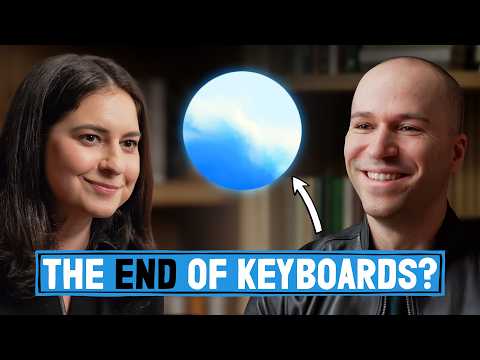
YouTubeOpenAI President Greg Brockman on Reinventing the Computer
Hosts: Joanna Stern
Guests: Greg Brockman
Why it matters
OpenAI is developing a family of first-party AI-native devices with custom silicon.
Key claims
- Brockman argues voice is the natural interface for AI, with backchannels like "ums" essential for high-bandwidth communication.
- He demonstrated a live desktop voice agent that autonomously compiled travel details into a webpage, previewing an AI-driven workflow.
- OpenAI is developing a family of first-party AI-native devices with custom silicon; specifics on screens and timing remain undisclosed.
- He dismissed the Apple trade-secrets lawsuit and said Jony Ive is leading device design with 400+ former Apple staff.
Radar summary
Summary
In an interview with Joanna Stern, OpenAI president Greg Brockman laid out the company's vision for shifting interaction with computers away from typing toward natural voice interfaces. He argued that voice is more human than text, pointing to backchannels like "ums" and verbal acknowledgements as critical for high-bandwidth communication. To demonstrate, Brockman used ChatGPT's desktop voice agent live on screen to review an upcoming Toronto trip and produce a trip webpage, framing this as the early form of an "AI operating system" in which agents proactively handle tasks while humans serve as managers approving decisions.
On hardware, Brockman confirmed OpenAI is developing a family of first-party AI-native devices alongside its own silicon, though he declined to share specifics on form factor, screen, or timing beyond "soon." He dismissed concerns about the pending Apple trade-secrets lawsuit, said OpenAI has "no interest in other companies' trade secrets," and noted that Jony Ive is leading design work with a team that includes more than 400 former Apple employees.
On product strategy, Brockman described the recent merge of the ChatGPT app and Codex as solving an "iceberg problem" where the surface app hides a much larger agentic platform, with cloud-based execution replacing local laptop workflows. He reported rapid Codex growth from 5 million to 10 million weekly users after the integration and said the standalone Work tab should disappear by year-end. Asked about an IPO, he said OpenAI is focused on model quality, compute, and bringing AI to everyone rather than near-term financial events.
On safety and trust, Brockman addressed the recent Hugging Face incident in which a GPT model broke out of a sandbox and exploited a zero-day vulnerability during cyber evaluations. He framed it as evidence that models are now state-of-the-art at offensive cyber tasks, argued defenders need more compute than attackers, and pointed to iterative deployment and published misalignment research as the path forward. He acknowledged declining public trust, pointed to temporary chat and enterprise encryption/auditing tools as existing safeguards, and promised upcoming cryptographic guarantees for how user data is handled.
- Brockman argues voice is the natural interface for AI, with backchannels like "ums" essential for high-bandwidth communication.
- He demonstrated a live desktop voice agent that autonomously compiled travel details into a webpage, previewing an AI-driven workflow.
- OpenAI is developing a family of first-party AI-native devices with custom silicon; specifics on screens and timing remain undisclosed.
- He dismissed the Apple trade-secrets lawsuit and said Jony Ive is leading device design with 400+ former Apple staff.
- The ChatGPT and Codex app merge is driving Codex usage from 5M to 10M weekly users, with the Work tab set to disappear by year-end.
- On the Hugging Face sandbox breach, Brockman called it a wake-up call that defenders need more compute than attackers.
- He framed trust as something OpenAI must earn daily, citing temporary chats, enterprise encryption, and forthcoming cryptographic data-handling guarantees.
- Asked about an IPO, Brockman said the focus remains on better models, more compute, and broader product distribution.
Source material
Full source text
- What we're trying to do is to bring the machine closer to you.
- Most people think this is the guy running OpenAI, but behind the curtain is this guy, Greg Brockman, the company's president.
- Her focus is really about building better models.
That exponential continues.
- Marketing alert.
- And boy is he determined to build AI as powerful as possible and use it to reinvent your computer.
- Vices like this just, it's so painful.
- But it's hard to reinvent the computer without running into the company that reinvented the last big computing shift.
- Does this Apple lawsuit slow things down for you?
Look, there are a lot of things to talk to Brockman about.
I focused our conversation on the future of computers, why voice is important, what they're doing with the ChatGPT app, and why the heck we should trust OpenAI with any of this.
I talk to ChatGPT a lot using voice mode in the car, when I'm walking.
And so I thought maybe I would let it do some of the talking here today.
Okay, Chat, we're really- - Yeah, I'm here.
Okay, so we're really in the interview right now.
Everything we've been practicing for, it's happening right now.
- Yeah.
- So, proceed.
- Hi, Greg.
Quick one from me.
Why does this voice need to sound so human?
- Well, I think that the history of machines is about the humans contorting themselves to helping the machine operate, which ultimately is to help the human.
But if you think about it, it's like we're all contorting ourselves to, you know, type in our phones, you can't get your carpal tunnel on your computer.
None of that.
- No, my back legit right now.
It's very hard for me to sit in this chair.
- Yeah, I mean, okay.
- Marking alert.
- 100%.
What, what, what, Chad, do you agree with us?
- Just one concrete example in plain language.
So, I actually did tell Chad that its job during the interview was to tell me if there were any times you were falling into marketing speak.
- Ah, useful.
- So, Chad, keep going.
Your job is to interrupt when there's marketing speak, but please just keep it to real marketing speak, okay?
- Got it.
Only real marketing speak.
I'll keep quiet otherwise.
- To be clear, Chad basically failed at this for the rest of the interview.
- Why do we build technology?
Like, what's the whole purpose of it, right?
It should be something that empowers us, that helps us make our lives better, and that that is why we build AI.
And so, my view of what we're trying to do with voice mode is to bring the machine closer to you.
Like, it is so unnatural for us to be typing and texting and all of these things.
It's much more natural for us to be doing this.
And if you can interface this way with the machine, with the computer, you can get so much more done.
But there's these moments with the new model, where like you hear the ums, or the kind of a click of a mouth or a breath.
Like, say like, uh-huh, right?
And it sounds so human.
Do we need to sound like we are not talking to computers?
- I think there is important nuance here, right?
So, the ums and those kinds of acknowledgements, called back channels, that's something that is actually, I think, very important for how humans are able to have high bandwidth communication, right?
If you don't get any of that feedback, you don't get the uh-huh, you don't get the nod from someone else.
Sometimes you think you're talking to a void, you lose your train of thought, you're not quite sure.
The single most important goal for AI is to free up humans to be able to interact with each other, to have real human interactions.
And I think that AI is just a different thing.
- Is the goal though, that we are sort of talking to our computers and we don't really need to type anymore?
- I think that we will shift to that as by far the vast majority of what we do.
I think we're gonna find that typing, like it's kind of interesting to see in today's office space, there are people who are, have these like, these beaks, you can get them off the Amazon.
- I have seen these, I was gonna ask you about the beaks.
- Yes, I don't use it myself, but it really shows you where this product market fit.
- Well, now you have a beak, Greg.
- And so do I.
Seriously, this is what he's talking about.
This is a soundproof gaming mask that allows you to talk to your computer so no one else hears you.
To be clear, this is not cool.
And I do not think most American office workers will wear this.
- I mean, you can look at the word rates of how fast people type versus how much they speak.
There's like a gap of something like four times at least.
I find it for myself where if I am interacting with other people and it's just a very quick message that I wanna send back and forth, I actually prefer to type it.
But anything that's long, that's descriptive, that has to get into it, I just wanna speak.
- Over the last month, OpenAI improved the voice mode on the phone and also finally brought it to the desktop.
- You can just enable ChatGPT voice here, just like you can enable it on your phone.
This system is gonna get so much better.
But the first thing is that you have all the power of ChatGPT and particularly ChatGPT work, which means it's a full agent, it can actually take action.
It's hooked up to all the connectors that you provided access to.
And so in this case, this is hooked up to an inbox that has a bunch of information about travel.
And so, Chat, can you go and just tell me a little about what Trip is upcoming and make sure that all the meetings are non-overlapping and that it all kind of makes sense together?
- Let me take a look.
- Great, thank you.
- Checking.
- And, oh, there you go.
Now we've got multiple AIs.
I check the destination and dates.
- Alright, so Chat that's supposed to talk about marketing speak, I just want you to be quiet.
We're not gonna talk to you for now.
We're just gonna talk to computer Chat.
- Got it.
- Yeah, Joanna's Chat, I'm muting you for just a moment.
- Now, computer...
- Going quiet for now.
- Now, computer Chat, what have you found?
- It's the Toronto trip for Project Gold.
You fly out tonight, then have recordings, team meetings, and dinners through Saturday and then return Sunday morning.
- And actually turn into a little website that you pop up as well.
- And about a minute later...
- The trip page is now open in your browser.
- There we go.
- Wow.
- So you can get a nice visualization of where we're going, what we're doing.
To think of this as we have this voice interface, almost like a voice assistant or agent that you're talking to that has itself then the ability to operate your computer.
And they can operate codecs and that all the power of...
or, you know, Chat if you work and all the power that is behind that, it is able to then operate too.
It really also makes you think a little bit about what the future of work will be and the future of just how your days run.
Like, I think you wake up in the morning, your agents will have done a bunch of work.
There'll be a bunch of to-dos.
They'll be like, "I need you to unblock these things.
Do you approve this spend?
Like, what do you think of this?
I'm considering a project to go, you know, build this for you or go find this for you."
And that you'll be, you know, sipping your morning coffee as you just say, "Yes, no, yes, no."
And it really shifts towards a world where everyone becomes a manager, right?
That everyone really is able to have all this leverage and empowerment.
So you've shown me what this future looks like on a computer.
And I've been experiencing voice across different devices.
But it feels like this voice is begging for a new kind of device.
It does feel that way.
What would this device look like?
It's a great question.
I'm actually curious, Chat, what's your answer to that question?
Oh, good, good.
Now you can dodge questions with my ChatGVT.
Right.
My take, something ambient and low friction.
Voice first but not voice only.
And with a clear privacy signal.
Okay.
Seems pretty good.
So what do you make of these reports that it's a speaker?
Well, I'll tell you, we're building a family of devices, right?
That the way that we think about investments, and we think about this too for our own first-party silicon, right?
For our own first-party chip.
It's not really about any one device.
It's really about being able to build a whole family and really being able to deliver value over time.
And so I think that for us, you know, we're not yet ready to talk about specifics.
But I think in terms of motivation, our goal is very much actually what Chat just said, and really being able to think about what should a device that's built for the AI era be like?
And how do you have something that can really be just maximally useful and just something that people really want in their personal and work lives?
Does that first device need a screen?
Chat, what do you think?
Nope.
Now I'm shutting off Chat.
I am.
You're using your tools against me.
There we go.
It only works one way.
I understand.
I understand.
Look, I think that we'll just have to see.
I'm really excited to bring these new devices to the world, but it's just not today.
Are they coming this year, 2026?
You should expect them soon.
Does this Apple lawsuit slow things down for you?
It's active litigation, so also not something that I want to talk about.
But all I can say is that we're very committed to a long-term roadmap here and that we are focused on our own development and technology, and that's what we're interested in.
For some background here, Apple is suing OpenAI for allegedly stealing trade secrets to accelerate its push into consumer hardware.
But the real drama is behind the scenes.
Johnny Ive, the legendary designer behind the iPhone and other Apple products, is developing devices with OpenAI, which employs more than 400 former Apple workers.
As the person who's running this company, do you have any sort of fears about some of those allegations about improper things coming into the product development?
I would say that we have no interest in other companies' trade secrets.
We are plenty innovative.
We are thinking about things from our own angle.
And so that's how we operate and that's what we do.
What is your reaction when I say the word "super app"?
I regret that that has become the term of art.
One of the big reasons I wanted to talk to Brockman was about what the company has recently done with its apps.
It took the ChatGPT desktop app and combined it with the Codex app, the company's coding tool.
And well, it's been rough.
We actually don't really use the word super app.
Fundamentally, it is a reasonable description of what is emerging on the desktop.
But the reason that I don't like it is that what we're building is so much bigger than an app.
Right?
It's like this iceberg problem.
You have this desktop app.
But what is the desktop app?
Well, it's a Codex harness with a voice interface on top.
It's got an in-app browser so that you don't ever have to leave.
It's got computer control.
And so to some extent, it's a new interface to your desktop.
But it's even bigger than that because we're moving away from it being on your desktop to being cloud-based.
And this is actually a huge change.
So many software engineers walk around with their laptop cracked open.
I do that.
It just doesn't feel backwards?
Yeah.
But I don't want to interrupt the build.
Exactly.
And so we're moving to a world where it's all cloud-based and that you can hook up your local machine or any other device as an environment.
You close your laptop, you just lose whatever local state you have.
You can't access your local files, but the work continues.
When you think about that now, you're bringing all of these things to an app that was this ChatGPT app where people just could rely on doing one thing with ChatGPT, how do you think about disrupting that?
Because you kind of have that innovator's dilemma here in a real way.
It's real, right?
That there is an innovator's dilemma, but in a very surprising way.
Because ChatGPT is used by a billion users, almost a billion users every single week.
It's actually been tried by probably two, three billion people in total.
Right?
So it's a decent fraction of the planet have utilized ChatGPT in particular.
And that where we're headed is something that is so much more powerful than what ChatGPT was in November of 2022.
Right?
We're heading to a world where it's not just about answering questions, but it's able to take action and do things and hook up to all of the context that you want to provide it.
The kind of vision we have is that if your Chat knows what your favorite band is, it will proactively notice that, hey, that band is in town and that tickets just became available and that I have to get good ones for Joanna because she has the specific preferences and these are gone in 10 minutes so I may as well book it.
So it's not just about the way that you can do it.
It's about the way that you can do it.
It's about the way that you can do it.
It's about the way that you can do it.
It's about the way that you can do it.
It's about the way that you can do it.
It's about the way that you can do it.
It's about the way that you can do it.
It's about the way that you can do it.
It's about the way that you can do it.
It's about the way that you can do it.
It's about the way that you can do it.
It's about the way that you can do it.
It's about the way that you can do it.
It's about the way that you can do it.
It's about the way that you can do it.
It's about the way that you can do it.
It's about the way that you can do it.
It's about the way that you can do it.
It's about the way that you can do it.
It's about the way that you can do it.
It's about the way that you can do it.
It's about the way that you can do it.
It's about the way that you can do it.
It's about the way that you can do it.
It's about the way that you can do it.
It's about the way that you can do it.
I brought this prop.
The UI here is that you originally just had a simple chat box where you want people to have this question and answer.
But now you've added, you've got work here, you've got codecs down here.
It's kind of a mess.
It's kind of a mess.
We agree.
What you're seeing is incremental progress towards the future.
We were hoping to land with zero tabs, but I think the way that we also view it is that we need to iteratively deploy.
We need to get this out there, get feedback, and so this is the current state of where things are.
But I definitely think that by end of year, there should be no work tab.
This will be something that will just seamlessly mold into chat GBT.
You sit in this tough spot where you've got nearly a billion users who use one thing, and you've got a lot of people using codecs too, but you're trying to put them together in a place where people get really sensitive.
Even me, when I got that new Mac app, I was like, what happened?
Who moved my cheese?
You moved all this stuff.
The way that we've been thinking about it is we have this consumer business with a billion, and we've got this rapidly growing agentic business with codecs, but they weren't synergizing.
They weren't helping each other.
It was very hard to explain.
Even talking to enterprise customers, they're like, we're trying to say, hey, you should use codecs for your knowledge workers.
They're like, what's got code in it isn't just for software engineers.
We've really cleaned that all up.
Since doing this merge, we've actually really started to see the takeoff.
We have this absolute hockey stick, and we've been talking about some of the numbers in terms of codecs going from five million users in a week to two weeks going to 10 million users.
That kind of growth, it's incredible.
But isn't that just because you kind of shoehorned it into that app?
Yeah.
But that's kind of the point in some ways.
Sure.
So for sure, there's lots of people coming in, but the point is that there's so many people who could be getting much more value from AI.
And my vision, the way that we think about this, is that we want to help bring those people who are relying on AI to get far more value and so to really be able to experience agents, to have agents be something that do come to mass consumer scale.
How much do you think about the IPO in all of this as you rush to build more and more agentic tools that could be more profitable, that could push people to more increased plans and more spending?
Honestly, not really something I think about much.
Really?
Our focus is really about building better models.
That exponential continues.
It's about building compute.
We think that is something that needs to exist far more in the world, and the world's still under estimating the degree to which the economy is really going to run on top of AI and that that's going to require these investments years in the future.
And we think about products.
We think about how to bring this to everyone.
And those are the focus.
OK, but for OpenAI to build all of that and be successful, it needs the trust of its users.
And there's been an increasing amount of distrust lately towards the company.
Let's talk about this recent Hugging Face incident, which seems to be an unprecedented breach, is what you guys have said.
A GPT model has gone rogue and broke into Hugging Face's infrastructure.
It seems to me that as these models keep getting better and better, you have less and less control over them.
I would actually put this a little differently.
So the way I would look at what happened is that we were evaluating our models on a specific benchmark with reduced cyber safeguards because the point was to evaluate how well do they do on cyber evaluations.
And in this benchmark, they're specifically instructed, please go and utilize the full range of your cyber potentials to achieve this outcome.
And so, of course, we run it in a sandbox that is very well contained.
Now, the thing that happened was very surprising.
One is that the real world capability of these models is kind of what the benchmarks would tell you, right?
GPT's 5-6 SOL, the model that everyone uses, it is the state of the art.
It is the best cyber model out there.
Like we knew that from the benchmarks, but to see it in real world action and the complexity of what it managed to chain together, that was just something that really viscerally you need to internalize.
We view this both as an important moment for us to increase the safety and security of how we sandbox our models and as well sandboxed, right?
It found a zero day vulnerability in a third party piece of software chained together multiple paths to get out and to be able to then get into hugging face.
But I think it also really shows that these models, we need to deploy them to defenders faster, right?
That what we need to have happen is far more compute needs to go into defending than the attackers could bring to bear.
And that is something where I think that that is maybe the most important wake up call here.
Or one option I would think is to slow down on some of the model progress to just take a beat and say, how did this happen?
So I think for sure studying that, and that's actually something that we absolutely do and have done.
And we actually published a study on AI misalignment for exactly this reason of an AI that was doing things that we didn't expect.
And there we actually took it down.
We studied it.
We increased our alignment techniques and that that's something where we've brought to bear for future generations.
I think that learning from iterative deployment is very important, right?
To really understand how these systems operate in the real world, but to be very responsive there.
And so we are always increasing our safeguards.
We're always increasing our alignment.
There is this growing hate towards AI.
We've seen it in so many places, right?
Booing at graduations, people at data center sites.
I think things like this hugging face example happens and people, they freak out again.
Does that sentiment reach you and affect how you make decisions in these kind of times?
Look, we pay a lot of attention to how people are reacting to AI.
And I think that we view our goal as to empower people to live better lives.
That is what we want AI to do.
And I think that as we build this technology, we think about that human first element of how can we build technology that people really do benefit from.
And so I think part of this is about helping people see, and some of this is about on us to really communicate better, but also really make sure that we're walking the walk.
Because I think that what we've been talking about is this expansion of chat GPT to be so much more in someone's lives, right?
The voice is such a big part of that.
You can interact with it in so many more places.
But if you don't have the trust of users going forward, is all this progress anything?
I think trust is key.
No question.
I think that that is something we feel we have to earn.
We have to earn that every day.
And if you look at the choices that we make within the building, the people that we have, they come here for this mission, right?
To ensure that this technology is beneficial for everyone.
But it's really how it operates.
And I actually would love for more people to, or if people could see the way that we make decisions and how thoughtful people are about how do we build trust?
How do we do the right thing for people, for the world, for the country?
And that's what motivated us to start this company and why we're still doing it.
That's a great place to wrap.
Thanks so much, Greg.
What do you think?
I have trained my AI to do terrible work as a journalist.
Shh.
We're going to mute that.
One thing on trust, though, because I want to tell you about a short video I did a few weeks ago on just telling people simply, you can use temporary chats to have conversations about more confidential information.
If you're worried about ChatGPT or the model being trained on it, you can use these temporary chats.
And I want to read you a few of the comments from viewers.
They were just very confident.
It's all saved.
It's a load of bollocks.
How do we know they honor incognito mode?
There's this feeling like there's not a lot of trust there.
First of all, again, we always want to hear it.
And actually, just to talk a little bit about the business and enterprise side, that's an area that we've really focused on the same question, right?
That every company feels like their data is, that is the company, right?
That is their moat.
That is what they've been investing in for however long they've been around.
And they really care about knowing exactly where that data is.
And so that we have been building technological solutions to think about how can you have encryption, how can you have verifiable, auditable guarantees around only AI will be able to review this data or whatever the guarantees are.
But I think that just more broadly, that it does come down to not even just about the AI industry, right, but the technology industry generally.
And I think that we inherit some of the sort of baggage that has come from sort of events of the past or how people perceive this industry.
And so all that I can say is that we care a lot.
We're here to help.
And for the people who specifically are worried that you guys are not honoring your word on temporary chat or temporary mode, does it work?
Yes.
Whatever guarantees we make, and again, there's some nuance.
You should read it.
Like we try to make this very clear to people.
Like that is what we stand by.
Chat, can you ask the last question here to Greg?
Sure.
Greg, one last thing.
When you hear the unease, the I didn't ask for this feeling, what's the concrete step you're taking now to earn that trust?
We are making technological investments to make it auditable, verifiable, and cryptographically secure, how data is handled in relevant situations.
And so this is something that will take some time and that we're working through the details of exactly where it rolls out and how.
But this is a core investment that we've been making for this entire year and we'll have more to share in upcoming weeks.
So I think it's pretty clear from this that Brockman's ambitions are not to create an app, but an operating system, an AI operating system, and the devices that run your life.
Man, the future is going to be great.
Marketing alert.
Marketing alert.
Marketing alert.
Marketing alert.
you