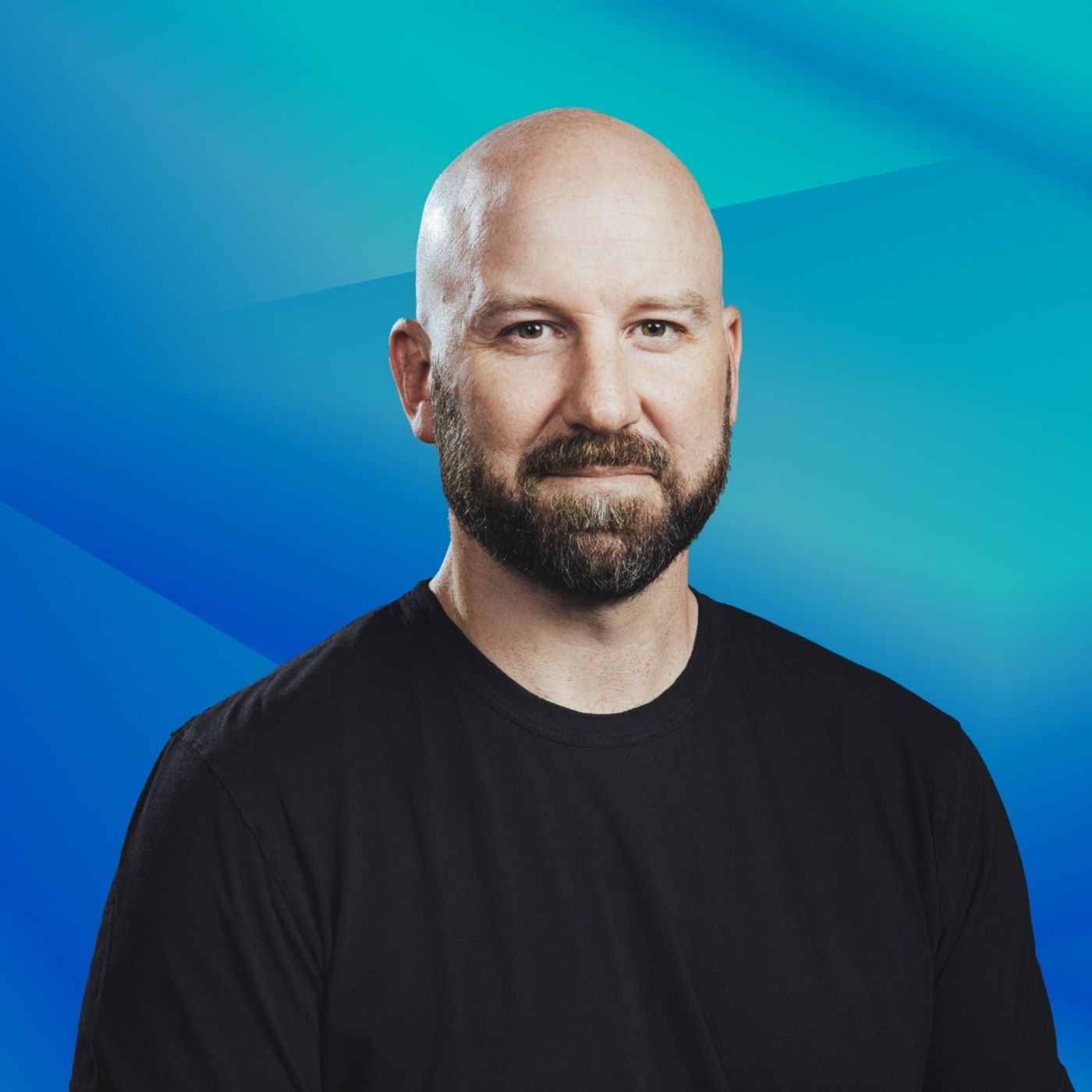
The a16z Show · 2025-04-24
PodcastMeta's Andrew Bosworth on the Post-Mobile Era, AI Glasses, and Inverting the App Model
Hosts: David George
Guests: Andrew Bosworth
Why it matters
Ray-Ban Meta glasses were six months from production as smart glasses when Llama 3 arrived.
Key claims
- Bos sees AI and face-worn hardware converging to replace the smartphone within ~10 years, though he views 5-year displacement of the phone as unlikely.
- Ray-Ban Meta glasses were six months from production as smart glasses when Llama 3 arrived; the team pivoted them into AI glasses with a Live AI feature that streams what the user sees.
- Orion combines full spatial displays with an assistant aware of the user's physical environment, enabling demos like identifying breakfast ingredients and suggesting recipes.
- Bos argues AI will invert the app model: consumers express intent, and the AI orchestrates services across providers—eroding brand loyalty but rewarding performance and price.
Radar summary
Summary
Meta CTO Andrew 'Boz' Bosworth, speaking with a16z's David George, argues that consumer tech is approaching a post-phone era where interfaces shift from taps and swipes to intent-based, agentic AI. He frames this as a once-in-a-generation opportunity and credits Meta's decade-long bet on face-worn hardware (Ray-Ban Meta glasses, Quest headsets, and the Orion AR prototype) with suddenly having a tailwind from the AI revolution, which arrived roughly a decade earlier than he and Mark Zuckerberg expected.
Bos walks through Meta's hardware roadmap, explaining how Ray-Ban Meta glasses pivoted from a smart-glasses product to AI glasses once Llama 3 landed, and how Orion combines spatial displays with an assistant that understands the physical world around the user. He envisions AI inverting the app model: instead of consumers choosing apps to solve problems, an AI agent orchestrates services in the background, surfacing dead-end queries as signals to developers about what to build. This, he warns, will erode brand attachment and reshape marketplace economics—similar to how Google search flattened the early web.
On model strategy, Bos defends Meta's open-source approach (Llama) as both a research philosophy and a 'commoditize your complements' business move, since Meta is primarily an application provider that benefits when AI is cheap and ubiquitous. He cites DeepSeek as proof that progress comes from many labs, not just frontier players. He closes by mapping the risks to this vision: invention risk (mostly solvable via cost and materials), acceptability risk (social norms around always-on sensing, privacy), and ecosystem risk—now softened because an AI-first interface could bypass traditional app stores entirely.
- Bos sees AI and face-worn hardware converging to replace the smartphone within ~10 years, though he views 5-year displacement of the phone as unlikely.
- Ray-Ban Meta glasses were six months from production as smart glasses when Llama 3 arrived; the team pivoted them into AI glasses with a Live AI feature that streams what the user sees.
- Orion combines full spatial displays with an assistant aware of the user's physical environment, enabling demos like identifying breakfast ingredients and suggesting recipes.
- Bos argues AI will invert the app model: consumers express intent, and the AI orchestrates services across providers—eroding brand loyalty but rewarding performance and price.
- Meta open-sources Llama both out of research philosophy and because Meta is an application provider that benefits from commoditized AI ('commoditize your complements').
- Bos cites DeepSeek as evidence that major model breakthroughs come from smaller labs when the ecosystem is open.
- Risk ranking: invention risk is largely a cost/materials problem and tractable; adoption and social acceptability (always-on sensing, memory augmentation, privacy norms) are bigger unknowns.
- Bos argues that if AI becomes the primary interface, the traditional developer ecosystem problem largely disappears because AI agents mediate access to services.
Source material
Full source text
Is there a better way I think there is?
Every single interface that I interact with, every single problem space that I'm trying to solve, are going to be made easier by virtue of this new technology.
If you were starting from scratch today, you probably wouldn't build this app-centric world.
You can imagine a post-phone world.
The past 20 years of consumer technology have been a story of apps, of touchscreens, and of smartphones.
These form factors seemingly appeared out of nowhere, and may be replaced just as quickly as they were ushered in.
Perhaps by a new AI-enabled stack, a new computing experience that is more agentic, more adaptive, and more immersive.
Now in today's episode, A16Z's growth general partner, David George, discusses this feature with arguably one of the most influential builders of this era.
That is, Metas CTO, Andrew "Boz" Bosworth, who spent nearly two decades at the company, shaping consumer interaction from the Facebook newsfeed all the way through to their work on smart glasses and AR headsets.
Here, Bos explores the art of translating emerging technologies into real products that people use and love.
Plus, how breakthroughs in AI and hardware could turn the existing app model on its head.
In this world, what new interfaces and marketplaces need to be developed?
What competitive dynamics hold strong, and which fall by the wayside?
For example, will brands still be a moat?
And if we get it right, Bos says, "The next wave of consumer tech won't run on taps and swipes, it'll run on intent."
So, is the post-mobile phone era upon us?
Listen in to find out.
Oh, and if you do like this episode, it comes straight from our AI Revolution series.
And if you missed previous episodes of this series with guests like AMD CEO Lisa Hsu, and Throbbitt co-founder Dario Amade, and the founders behind companies like Databricks, Waymo, Figma, and more, head on over to a16z.com/AIRevolution.
As a reminder, the content here is for informational purposes only, should not be taken as legal, business, tax, or investment advice, or be used to evaluate any investment or security, and is not directed at any investors or potential investors in any A16Z fund.
Please note that A16Z and its affiliates may also maintain investments in the companies discussed in this podcast.
For more details, including a link to our investments, please see a16z.com/disclosures.
Bos, thanks for being here.
Thanks for having me.
Appreciate it.
Okay, I want to jump right in.
How are we all going to be consuming content five years from now and 10 years from now?
10 years, I feel pretty confident that we will have a lot more ways to bring content into our view shed than just taking out our fun.
I think August Reality Glasses obviously are a real possibility.
I'm also hoping that we can do better for really engaging in immersive things.
Right now, you have to travel to like the sphere, which is great, but there's one of them.
It's in Vegas, it's a trip.
Are there better ways that we can have access to if we really want to be engaged in something, not just immersively, but also socially?
So it's like, oh, I want to watch the game.
I want to watch it with my dad.
I want to feel like we're courtside.
Sure, we can go and pay a lot for tickets.
Is there a better way?
I think there is.
So 10 years, I feel really good about all these alternative content delivery vehicles.
Five years is trickier.
For example, I think the glasses, the smart glasses, the A.I. glasses, the display glasses that we'll have in five years will be good.
Some of them will be super high end and pretty exceptional.
Some of them will be like actually little and like not even tremendously high resolution displays, but they will be like always available and on your face.
I wouldn't be doing work there, but like if I'm just trying to grab simple content in moments between, it's pretty good for that.
So I think what we are seeing is, as you'd expect, we're at the very beginning now of a spectrum of super high end, but probably very expensive experiences that will not be evenly distributed across the population.
A much more broadly available set of experiences that are not really rich enough to replace like the devices that we have today.
And then hopefully a continually growing number of people who are having experiences that really could not be had any other way today.
You're thinking about what you could do with mixed reality and virtual reality.
Yeah, we're going to build up to a lot of that stuff.
So throughout your career, I would say one of the observations I would have is you've been uniquely good at piecing together various big technology shifts into new product experiences.
So in the case of Facebook early days for you, obviously you famously were part of the team that created the newsfeed.
That's a combination of social media, a mobile experience, and applying your like old school AI to it.
That's right.
The old school AI.
Yeah, exactly.
But that's pretty cool and like a lot of times these trends, they come in bunches and that's what creates the breakthrough products.
So maybe take that and apply it to where we are today with the major trends that are in front of you.
Let me say two things about this.
The first one is I think if there was a thing that not me specifically, but I think me and my cohorts at Meta were really good at was like we really immersed in like what the problem was.
What were people trying to do?
What do they want to do?
And when you do that, you are going to reach for whatever tool is available to accomplish that goal.
That allows you to be really honest about what tools are available and see trends.
I think the more oriented you are towards the technology side, you get caught in a wave of technology and you don't want to admit when that wave is over and you don't want to embrace the next wave.
And you're building technology for technology's sake.
So like solving a product problem.
But if you're embracing like what are the issues that people are really going through in their life and they don't have to be profound.
I bring that up just because I think we're in this interesting moment where I think all of us have been through a phase where a lot of people wanted a new wave to be coming because it would have been advantageous to them.
But those things weren't solving problems that regular people had.
I think the reason we're so enthusiastic about the AI revolution that's happening right now is it really feels tangible.
These are real problems that are being solved and it's not solving every problem.
It creates new problems.
It's fine.
So it feels like a substantial real new capability that we have.
And what's unusual about it is how broad based it can be applied.
And while it has these interesting downsides today on factuality and certainly compute in cost and inference.
Yeah.
Those types of tradeoffs feel really solvable and the domains that it applies to are really broad.
And it's that's unusual.
Certainly in my career you almost always when these technological breakthroughs happen they're almost always very domain specific.
Yeah.
Cool.
This is going to get faster.
Yeah.
Or that's going to get cheaper.
Or that's now possible.
This kind of feels like oh everything's going to get better.
Yeah.
Every single interface that I interact with every single problem space that I'm trying to solve are going to be made easier by virtue of this new technology.
That's pretty rare.
Mark and I always believed that this AI revolution was coming.
We just thought it was going to take longer.
Yeah.
We thought we were probably still 10 years away at this point.
Yeah.
But what we thought would happen sooner was this revolution in computing interfaces.
And we really started to feel 10 years ago like the mobile phone form factor as amazing as it was.
This is 2015 was like already saturated.
That was what it was going to be.
And once you get past the mobile phone which is again the greatest computing device that any of us have ever used to this point of course.
It's like OK.
Well it has to be more natural in terms of how you're getting information into your body which is obviously ideally usually through our eyes and ears and how we're getting our intentions expressed back to the machine.
You no longer have a touch screen.
You no longer have a keyboard.
So once you like realize those are the problems like cool we need to be on the face because you need to have access eyes and ears to bring information from the machine to the person.
And you need to have these neural interfaces to try to allow the person to manipulate the machine and express their intentions to it when they don't have a keyboard or mouse or touchscreen.
And so that has been an incredibly clear eyed vision we've been on for the last 10 years.
But we really did grow up in an entire generation of engineers for whom the system was fixed.
The application model was the course the like interaction design.
Sure we went from a mouse to a touchscreen but like it's still direct manipulation interface which is literally the same thing that was pioneered in 1960s.
So like we really haven't changed these modalities and there's a cost to changing those modalities because we as a society have learned how to manipulate these digital artifacts through these tools.
So the challenge was for us was OK you have to build this hardware which has to do all these amazing things and also be attractive and also be light and also be affordable.
And none of these existed before.
And what I tell my team that's like that's only half the problem.
The other half the problem is great how do I use it like how do I make it feel natural to me.
I'm so good with my phone now.
It's an extension of my body of my intention at this point.
How do we make it even easier.
And so we were having these challenges.
And then what a wonderful blessing.
I came in two years ago much sooner than we expected and is a tremendous opportunity to make this even easier for us because the AIs that we have today are much greater ability to understand what my intentions are.
I can give vague reference and it's able to like work through the corpus of information as available to like make specific outcomes happen from it.
There's still a lot of work to be done to actually adapt it and it's still not yet a control interface like I can't reliably work my machine with it.
Yeah.
There's a lot of things that we have to do.
We know what those things are.
And so now you know much more exciting place actually.
Whereas before we thought OK we've got this big hill to climb on the hardware.
This big hill to climb on the interaction design.
We think we can do it.
And now we've got a wonderful tailwind where on the interaction design side at least there's the potential of having this much more intelligent agent that now has not only the ability for you to converse with it naturally and get results out of it but also to know by context what you're seeing what you're hearing what's going on around you.
Yeah.
And make intelligent inference based on that information.
Let's talk about like reality labs and this suite of products what it is today.
So you have quest headsets.
You have the smart glasses.
And then on the far end of the spectrum is Orion and some of the stuff that I demoed.
So just talk about the evolution of those efforts and what you think the markets are for them and how they converge versus not over time.
So when we started the Red Band Meta project they were going to be smart glasses.
And in fact they were entirely built and we were six months away from production when LAMA 3 hit.
And the team was like no we got to do this.
And so now they're A.I. glasses right like they didn't start as A.I. glasses but the form factor was already right.
We could already do the compute.
We already had the ability.
So yeah now you have these glasses that you can ask questions to.
And in December to the early access program we launched we call live A.I. So you can start a live session with your Red Band Meta glasses and for 30 minutes until the battery runs out it's seeing what you're seeing.
Yeah.
And it's funny because on paper the Red Band Meta looks like an incremental improvement to Red Band Stories.
And this is kind of the story I'm trying to tell which is the hardware isn't that different between the two.
But the interactions that we enable with the person using it are so much richer now.
When you use Orion, when you use the full A.I. glasses you can imagine a post phone world.
You're like oh wow like if this was attractive enough and light enough and battery life enough to wear all day this would have all the stuff I need.
Like it would all be right here.
And when you start to combine that with images that we have of what A.I. is capable of.
So you did the demo where we showed you the breakfast.
Yeah I did.
And it's yeah and for what it's worth I'll explain it because it's very cool.
Kind of walk over and there's a bunch of breakfast ingredients laid out.
And I look at it and I say hey Meta what are some recipes.
That's right.
These ingredients.
So that is for me at least when we think about Orion initially it didn't have that A.I. component when we first thought about it.
It had this component that was very direct manipulation so it was very much modeled on the app model that we're all familiar with.
Yeah of course.
And I think there's a version of that.
Yeah of course you're going to want to do calls and you're going to be able to do your email and be able to do your texting and you want to be able to play games.
We have to play our Stargazer game and you know do your Instagram reels.
What we're now excited about is OK take all those pieces and layer on the ability to have an interactive assistant that really understands not just what's happening on your device and what emails coming in.
Yeah of course.
But also what's happening in the physical world around you.
And is able to connect what you need in the moment with what's happening.
And so these are concepts where you're like wow what if the entire app models upside down.
What if it isn't like hey I want to go fetch Instagram right now it's like hey the device realizes that you have a moment between meetings you're a little bit bored.
Hey do you want to catch up on the latest highlights from your favorite basketball team like those things become possible.
Having said that the hardware problems are hard and they're real and the cost problems are hard and they're real and come for the king you best not miss.
The phone is an incredible centerpiece of our lives today.
It's how I operate my home.
I use my car.
I use it for work.
It's everywhere.
And the world has adapted itself to the phone.
So it's weird that my ice maker has a phone app but it does like I don't know.
I'm not sure it seems excessive but like somebody today is like I got to make an ice maker.
Number one job.
Got to have it out.
The smart refrigerator like I don't need this is like take it on me.
I do think it's going to be a long.
That's what has the 10 year view for me is I think much clearer.
I think these things are going to be available widely accepted increasingly adopted the five year view is harder because man like even if knocking out the dominance of the phone and five years it just seems so hard.
I'm thinking it's unthinkable for us.
Right.
That's what I said like Ryan was the first time I thought maybe Orion I put it out of my head like the first time I've had into that.
I was like OK like yeah it could happen.
Yeah like there does exist a life for us as a species past the phone.
Yeah.
Yeah.
It still has the whole dynamic of well how do I envision my life without the operating system that I'm so accustomed to.
I feel the physical stuff that you do but just the familiarity and all the stuff that's working in there.
So what do you think of the interim period.
So maybe you get to the point where the hardware is capable.
It is market accessible but to tether to the phone.
Do you take a strong view that you will never do that and let the product stand.
Like how do you think about that piece.
So phones have this huge advantage and disadvantage huge advantage which is like the phone is already central to our lives.
It's already got this huge developer ecosystem.
It's this anchor device and it's a wonderful anchor device for that.
The disadvantages I actually think what we found is the apps want to be different when they're not controlled via touchscreen.
And that's not super novel.
A lot of people failed early in mobile including us by just taking our web stuff and putting on the mobile phone and be like oh the mobile phone will just put the web there.
But because it wasn't native to what the phone was and I mean everything from interaction design to the actual design to the layout to how it felt like because we weren't doing phone native things we were failing with one of those popular products in the history of the web.
This is like the major like design feel like the skeuomorphic idea versus the native idea.
Yeah.
And I think having the developers is a true value and I think having all this application functionality is a true value.
But then once you actually reprojected into space and you're manipulating it with your fingers like this as opposed to a touchscreen you have much less precision.
It doesn't respond to voice commands because there's no tools for that.
There's no design integration for that.
So having a phone platform today feels like wow I've got this huge base to work from on the hardware side but I've also actually got this kind of huge anchor drag on the software side.
Yeah.
And so we're not opposed to these partnerships.
I think it'll be interesting to see once the hardware is a little bit more developed how partners feel about it.
And I hope they continue to support people who buy these phones for twelve hundred dollars thirteen hundred dollars being able to bring whatever hardware they want to bring to take the full functionality of that with them.
The biggest question I have is whether the entire app model we were imagining a very phone like app model for these devices admittedly a very different interaction design input and control schemes are very different and that demands like a little extra developer attention.
I am wondering if like the progression of AI over the next several years doesn't turn the app model in its head.
Right now it's a kind of unusual thing where I'm like I want to play music.
So in my head I translate that to I have to go open Spotify or open title and the first thing I think of is who is my provider going to be.
Yeah of course.
I suppose like that's not what I want streaming limiting what I want is to play music.
Yes.
And I just want to be like go to the A.I. and like cool play this music for me.
Yeah.
And it should know.
Oh like you're already using this service.
We'll use that one or these two services are both available to you.
But this one has a better quality song or this one has lower latency where everything is.
Or it's like hey the song you want isn't available in any of these services.
Do you want to sign up for this other service that does have the song that you want.
I don't want to have to be responsible for orchestrating like what app I'm opening to do a thing.
We've had to do that because that's how things were done in the entire history of digital computing.
You have an application based model that was the system.
So I do wonder how much A.I. inverts things.
That's a pretty hot day.
Yeah.
Inverts things.
And that's not about wearables.
That's not about anything.
That's just like even at the phone level if you're building a phone today would you build an app store the way you use to really build an app store.
Or would you say like hey you as a consumer express your intention express what you're trying to accomplish and let's like see what let's have system see what it can produce.
Yeah.
Yeah.
But I do think if you were starting from scratch today you probably wouldn't build this like app centric world where I as a consumer I'm trying to solve a problem and fresh up to decide which of the providers I'm going to use to solve it.
Yeah of course that's fascinating and again I think it's a function of where the capabilities are today and I think where we have line of sight into orchestration capabilities as I'd say knowledge wise that is probably capable today I think orchestration wise it's probably for a little bit away.
And then of course you got to build the developer ecosystem to the platform which is incredibly hard.
That's the thing I want to focus.
That's the hardest piece.
Yeah.
The stronger we get at a genteck reasoning and capabilities the more I can rely on my A.I. to do things in my absence and at first it will be knowledge work of course that's fine.
But once you have a flow of consumers coming through here what you're going to find is that they're going to have a bunch of dead ends.
Yeah.
Where they're going to ask the A.I. hey can you do this thing for me and say no I can't.
That's the gold mine that you take to developers and you're like hey I've got a hundred thousand people a day trying to use your app.
They're trying to use your app.
Yeah.
They don't know they are.
Yeah.
They're trying to use their app.
Look here's the query stream.
Here's what's coming through.
And we're going to tell them no today.
If you build these hooks you got a hundred thousand people clamoring for coming in today for your service.
Yeah.
And it's totally fine for our A.I. to go back and say hey you got to pay for this.
There's a guy who does this for you.
You got to pay for it.
Yeah.
And I by the way I'm not just talking about apps.
I'm like it's a plumber.
It's like there's something about marketplace here that I think emerges over time.
So that's how I see it playing out.
I don't see it playing out as like someone goes into a dark room and comes up with this app platform.
No.
What's going to happen is there's going to become a query stream of people using A.I. to do things and the A.I. will fail repeatedly in certain areas because that's a type of functionality that is currently behind some kind of app wall.
And there's no.
There's no.
Or it hasn't been built native to whatever consumption mechanism.
There's no bridge.
Yeah.
And everyone wants to build the bridges like no it's going to manipulate the pixels and it's going to manipulate.
It's like fine.
It can do those things.
I'm not saying the A.I. can't cross those boundaries.
But I think over time that becomes the primary interface for humans interacting with software as opposed to the like pick from the garden of applications.
Yeah.
That makes a ton of sense.
That's a very alluring end state just as a consumer.
Right.
Yeah it's messy and I think it creates these very exciting marketplaces for functionality inside the A.I. it abstracts away a lot of companies brand names which I think is going to be very hard for an entire generation of brands.
Yeah.
Like the fact that I don't care if it's being played on one of these two music services that's hard for those music services who like really want me to care.
Yeah.
And like they want me to have a stronger opinion.
Yeah.
About it.
And they want me to have an attachment.
Yeah.
I don't want to have an attachment.
There are some things where you may value the attachment.
You know in the world around like here's an app garden and these two are competing for my eyeballs the brand that they've built is the hugely valuable asset in the world where I just care if the song gets played and sounds good.
A different set of priorities are important.
I think that's net positive because what matters now is performance on the job.
Yeah.
Actual product experience value and price and price for performance like matters a lot.
Yeah.
I think a lot of companies will love that.
Well abstracted abstracting away that's like effectively articulating abstracting away margin pools which puts a lot more pressure on us trusting the A.I. or the distributor of the A.I. And so far as I'm floating between different companies that are each providing A.I.s the degree which I trust them to not be bought and paid for in the back end.
They're not giving me the best experience or the best price for money.
They're giving the one that gives them the most money.
Yeah.
Of course.
So yeah.
It's the experience of people's search today.
Right.
It's a very different world.
It's a very different world.
It's a very different world.
But you can actually see inklings of it today.
Right.
So certain companies are willing to work with the new A.I. providers in a gintic task completion.
And then they're like well actually wait a minute.
I don't just want the bots executing this stuff.
I want the humans coming to me.
I think I need that.
It's existential that I have this brand relationship directly with the demand side.
Yeah.
So that's potentially messy but a bright future.
Especially if we don't have to pay that like brand tax.
Yeah.
It'll be very messy.
I don't know it's avoidable because I think once consumers start to get into these tight loops where more and more of their interactions are being moderated by an A.I. you won't have a choice.
That's like where your customers will be.
Yeah.
But it's gonna be a pretty different world.
Yeah.
It'll be a different world and there will probably be some groups that try to move fast to it as a way to compete with things that are branded.
Yeah.
And just say I'm gonna compete on performance and price.
Yeah.
That's right.
Where do you think that could potentially happen first?
It probably will mirror query volume.
I think of this a lot.
We do have a model of this which was in the web era when Google became the dominant search engine.
So before that the web era was like very index based.
It was like Yahoo and it was like links and getting major sources of traffic to link to you was the game.
And then once Google came to dominance which happened very quickly over maybe a couple of years I feel like.
Yeah.
All that mattered was like SEO.
All that mattered was like where you were in the query stream.
Yeah.
And the query stream dictated what businesses came over and succeeded.
Yeah.
Because like the queries that were the most frequent those were the ones that came first.
Yeah.
And so like travel.
Travel is the one that's traveling right away.
Right.
Yeah.
Right.
Like it was a huge disruption in travel agents went from a thing that existed to a thing that didn't exist in a relatively short.
And they all created on the basis of like execution of the best deal.
It was literally like seamless fashion with the highest conversion.
I think SEO has gotten to a point now where it's kind of a bummer.
It's like made things worse.
It's like everyone's got so good.
It's just like game.
Everyone's gotten so good at it.
Like especially with AI.
That's right.
So I actually think it's like we had this incredible flattening curve.
Now it's like starting to kind of rise up in terms of especially with paid placement to that's so dominant.
So it's like.
So dominant.
So yeah.
That's right.
And this is like probably the cautionary tale for how this plays out in a eyes as well.
I think there will be a pretty good golden era here where the query stream will dictate what businesses come first because those are the queries that are that's the volume of people unsatisfied with the existing solutions that they have.
Yeah.
Otherwise they wouldn't be asking about it.
Product providers and developers will follow that and build specifically solve those problems.
That's right.
Once it tips in each vertical we get a lot of progress very quickly towards better solutions for consumers.
And then once it's a steady state it starts to be gamesmanship.
Yeah.
And that's the thing we fight.
And that's decaying or.
That'll be the true test of AI.
True test.
Can it get through that?
Can it avoid falling into that trap?
Can it avoid that trap?
Yeah.
Yeah.
That's right.
Exactly.
Well a lot of that is business model driven.
We'll see how that evolves over time too.
That's right.
You guys have also been leading from the front on this idea of open source.
Yeah.
And so talk about some of your efforts on that side of the business.
And then what is the ideal market structure of the AI model side for you guys.
There's two parts that came together.
The first one is LAMA came out of FAIR, our fundamental AI research group.
And that's been an open source research group since the beginning.
Since John LeCun came in and they established that.
It's allowed us to attract incredible researchers who really believe that we're going to make more progress as a society working together across boundaries of individual labs than not.
And to be fair, it's not just us.
Obviously the transformer paper was published at Google and like the big we self supervised learning was our contribution.
Like everyone's contributing to the knowledge base.
But when we open source LAMA, that's how all models were open source of that.
Yeah.
Yeah.
Yeah.
Of course.
Like everyone was open.
The only thing that was unusual was everything else just went closed source over time.
Yeah.
That's right.
But before that, every time someone built a model, they open sourced it so that other people could use the model and see how great that model was.
Yeah.
Mostly how it was done.
Sure.
If it was worth anything.
Certainly some specialized models for translations and whatnot were kept closed.
But like if it was a general model, it was what was done.
LAMA2 was probably the big decision point for us.
LAMA2, and this is where I think the second thing that came in is a belief that I've had that I was advancing really strenuously internally that Mark really believes in too.
And he's written his post about this.
Which is first of all, we're going to make way more progress if these models are open.
Yeah.
Because a lot of these contributions aren't going to come from these big labs.
Like they're going to come from these little labs.
We've seen this already with deep seek in China.
Of course.
Which was put in a tough spot and then innovated incredibly in the memory architectures and a couple other places to really get amazing results.
And so we really believe we're going to get the most progress collectively.
The second thing is inside this piece is this is a classic, I believe these are going to be commodities.
And you want to commoditize your compliments.
Yes.
And we're in a unique position strategically where our products are made better through AI, which is why we go investing in it for so long.
Whether it's recommendation systems in what you're seeing in feed, reels, whether it's simple things like what friend do I put at the top when you type you want to make a new message, who do I think you're going to message right now.
Of course.
Little things like that.
It's a really big expanse of things like, hey, here's an entire answer, here's an entire search interface that we couldn't do it for in WhatsApp.
Yeah.
Yeah.
Yeah.
Yeah.
Yeah.
That like now is a super popular surface.
Yeah.
So there's all these things that are possible for us that are made better by this AI.
But nobody else having this AI can then build our product.
The asymmetry works in our favor.
Yeah, of course.
And so for us, like commoditizing your compliments is just good business sense and making sure that there is a lot of competitively priced, if not almost free models out there.
It helps the entire industry.
Helps a bunch of small startups and academic labs.
It also helps us.
Yeah.
So we're the application provider.
Huge things to share.
So we're all super aligned on that.
Business model alignment and industry.
It's a strong alignment there.
Yes.
So it comes from both this fundamental belief in how this kind of research should be done and then aligns with a business model.
And so there's no conflict.
Societal progress plus business model alignment.
It's all together.
It's all going the same direction.
It's great.
I want to shift gears to talking about the impediments to progress and like what you think, you know, are kind of linear versus not.
So the risks to the vision, to the overall vision that you articulated, obviously hardware, AI capabilities, vision capabilities and screens and all that, the resolutions.
We talked about the ecosystem and developers and native products.
So maybe just talk about what you see are kind of the linear path things and the things that may be harder or riskier.
We have real invention risk.
There exists risk that the things that we want to build, we don't have the capacity to build as a society, as a species yet.
Yeah.
And that's not a guarantee.
I think we have windows to us.
You've seen Orion.
So like it can be done.
There's quite a year.
It feels like it's a cost reduction exercise.
It's a materials improvement exercise.
It can be done.
There are still some invention risk.
Far bigger than the invention risk.
I think is the adoption risk.
Is it considered socially acceptable?
Are people willing to learn a new modality?
Like we all learned a type when we were kids at this time.
When we were kids at this point, we were born with phones in our hands at this point.
Yeah.
Are you willing to learn a new modality?
Is it worth it to them?
You can use them risk even bigger than that.
Like, great, you build this thing.
But it just does like your email and reels.
That's probably not enough.
Do people bring the suite of software that we require to interact with modern human society to bear on the device?
Those are all huge risks.
I will say we feel pretty good about where we're getting on the hardware on acceptability.
We think we can do those things.
That was not a guarantee before.
I think with.
The Ray Van Meta glasses, we're feeling like, okay, we can get through.
You feel like the acceptability.
Humans will accept that I'm using technology within that super interesting regulatory challenges.
Here I have an always on machine that gives me superhuman sensing.
My vision is better.
My hearing is better.
My memory is better.
That means when I see you a couple of years from now and I haven't seen you in the internet.
I'm like, oh, God, I remember.
We did a podcast together.
What's the guy's name?
Can I ask that question?
Am I allowed to ask that question?
Yes.
What's the question?
You asked that question?
What is your right?
It's your face.
You showed me your face.
And if I was somebody with a better memory, I could remember the face.
So like that happened, but I don't have a great memory.
So am I allowed to use a tool to assist me or not?
So there's really subtle regulatory privacy, social acceptability questions that are like embedded here that are super deep individually and can derail the whole thing.
Like you can easily derail.
Easily derail the whole thing in slow progress.
That's the thing I think we sometimes think in our industry.
It's like feel the dreams if you build it, they will come.
And it's like, no, a lot of things have to happen.
Right?
Well, you can also step.
That's the risk.
Are you sure you can get your hands locked?
Great technology can get derailed for long periods of time.
Nuclear power got derailed.
For seven years, for bad reasons.
We know we're bad now.
And they just played it wrong.
Yeah, of course.
And they were like, I ignore this.
It's like, no, these people actually feel this way.
So I think, yeah, I feel pretty good with the invention risk.
Acceptability risk is looking better than it has been.
But like, I think there's still a lot of big hedges to cross there.
I actually think the ecosystem risk was one I would have said previously was the biggest one.
But AI is now my potential silver bullet there.
If AI becomes the major interface, then it comes for free.
Yeah.
And I will also say that we've had such a positive response from even just set aside Orion, even the Ray Ban metas companies that want to work for us and build on that platform.
It's not a platform yet.
We connect an app.
We literally don't have any space yet.
Yeah.
But we did do a partnership with Be My Eyes, which helps blind and hard of vision people navigate.
And it's really spectacular.
And so there's a little window there where we can start building.
So yeah, I would say the response has been more positive than I had expected.
So everything right now, tailwinds, a matter of time.
And that's how tailwinds abound right now.
And to be honest, after eight years of nine years of headwinds, having a year of tailwinds is nice.
Yeah, I'll take it.
I'll take it.
I'm not going to look at the things.
No victory left.
Yeah, but that's good.
Okay, but it's all hard.
Yeah, at every point, it could all fail.
Yeah, I like that you just started with its invention risk.
It's like, there's many ways this just won't work.
Yeah, that's right.
Even if it does work, why not take that out?
Well, I'll say two things about this.
And this is where Mark just deserves so much credit is we're true believers.
Like we have actual conviction.
Yeah, Mark believes this is the next thing.
It needs to happen.
And it doesn't happen for free.
Like, we can be the ones to do it.
Our chief scientist, Michael A.
Rash, who's one of my favorite people I've ever gotten a chance to work with.
He talks a lot about the myth of technological eventualism.
It doesn't eventually happen.
There's a lot of people in tech.
Yeah, AR eventually happened.
Yeah, that's not what fucking works.
No, not that would actually do have a specific one that would just absolutely not have to stop and put the money and the time and do it.
Yeah, somebody has to stop and do it.
And that is the difference.
The number one thing I'd say is like the difference between us and anybody else is we believe in this stuff in our course.
This is the most important work I'll ever get a chance to do.
This is Xerox, Park level, new stuff where we're rethinking how humans are going to interact with computers.
It's like JCR, lick lighter and the human computing.
We're seeing that with AI.
It's a rare moment.
It's a rare moment.
It doesn't even happen once a generation, I think it may happen every other generation, every third generation.
Like, you don't get a chance to do this all the time.
So we're not missing it.
We're just like, we're going to do it.
And we may fail like it's possible.
We will not fail for lack of effort or belief.
Great.
Thanks a ton, boss.
Cheers.
Yeah, cheers.
Yeah.